
Autoflowering vs Photoperiod Seeds
The single biggest decision in your first grow: speed and simplicity, or control and maximum yield.
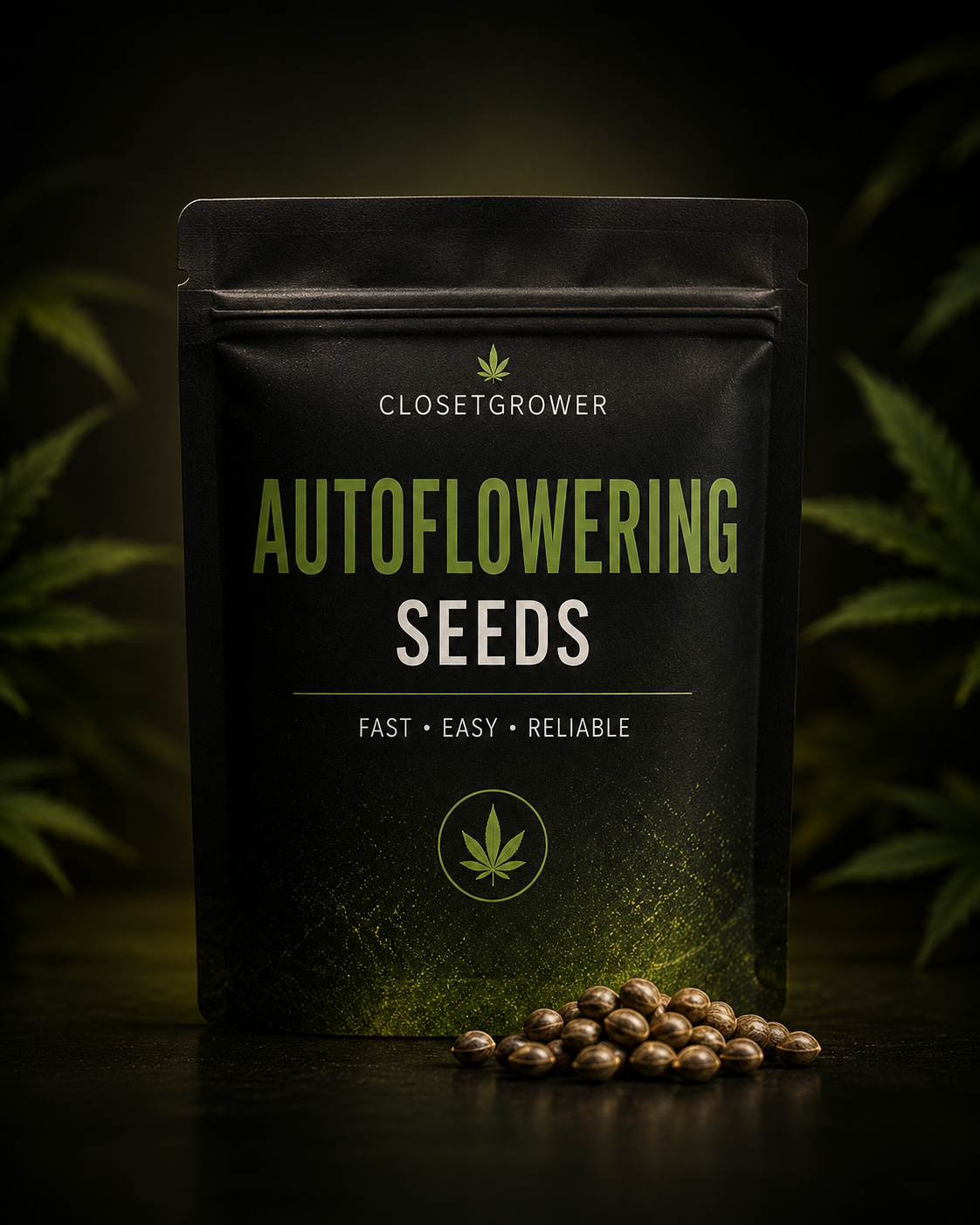
Every first-time grower hits this fork in the road. Autoflowering and photoperiod seeds both produce the same harvest you came for — the question is how much control you want and how much patience you have. This guide walks through both honestly.
The short answer
If you want a smaller plant, a fixed timeline, and almost zero schedule management — pick autoflowering. If you want big yields, training flexibility, and the option to clone or mainline — pick photoperiod.
How autoflowering seeds work
Autoflowering genetics carry a recessive Ruderalis trait that triggers flowering on age, not light schedule. You run 18 hours of light, 6 hours of dark from sprout to harvest. The plant flips to flower on its own around week 4 and finishes in 8–10 total weeks.
- Finishes in 8–10 weeks from seed
- Stays short — typically under 90cm
- No light schedule changes ever
- Lower peak yields per plant, but you can run more cycles per year
- Cannot be cloned effectively — the clone inherits the mother's age
How photoperiod seeds work
Photoperiods follow the sun. They stay in vegetative growth as long as you keep them on 18+ hours of light, and only start flowering when you flip the schedule to 12 hours of light and 12 hours of dark. That single flip gives you complete control over plant size and timing.
- Veg as long as you want — weeks or months
- Higher peak yields per plant
- Can be trained, topped, mainlined, or scrogged aggressively
- Clone-friendly, mother-plant friendly
- Requires strict dark cycle once flowering starts
Which is better for small spaces?
For closets and 2×2 tents, autoflowers usually win on sheer convenience. Short, fast, no timer mistakes. For 3×3 and larger, both work — photoperiods give you a bigger upside if you're willing to train them.
Quick questions.
- Are autoflowering seeds easier to grow than photoperiod seeds?
- For first-time growers in a closet or 2×2 tent, yes. Autoflowers run on a single 18/6 light schedule from sprout to harvest, so there's no separate flip to flower and no clock errors. Photoperiods need a strict 12/12 dark cycle once you flip, which is harder to manage in shared apartment spaces.
- Do photoperiods always yield more than autoflowers?
- Per plant, usually yes — photoperiods can veg as long as you want and stack more flower sites. Per square foot per year, the picture is closer because autoflowers finish faster, so you can run more cycles in the same space.
- Can I run autoflowers and photoperiods in the same tent?
- Only if you're willing to run an 18/6 schedule the whole way through, which means the photoperiod will stay in veg indefinitely. Most growers separate the two or stick with one type per cycle.
- Which type is better for stealth and discretion?
- Autoflowers tend to be shorter and finish faster, which keeps the ‘loud’ late-flower window narrower. For a closet or apartment grow, that's usually the more discreet pick. See low-odor cannabis strains for genetics that pair well with a basic carbon filter.
- Where do I start if I'm new?
- A feminized autoflower in a 2×2 tent with a 100W LED is the most forgiving setup we recommend. Read the beginner autoflowering setup guide and browse autoflowering cannabis seeds or cannabis seeds for closet growers. Night Sprint autoflowering seeds are a representative beginner-friendly low-odor pick from the autoflower lineup.