
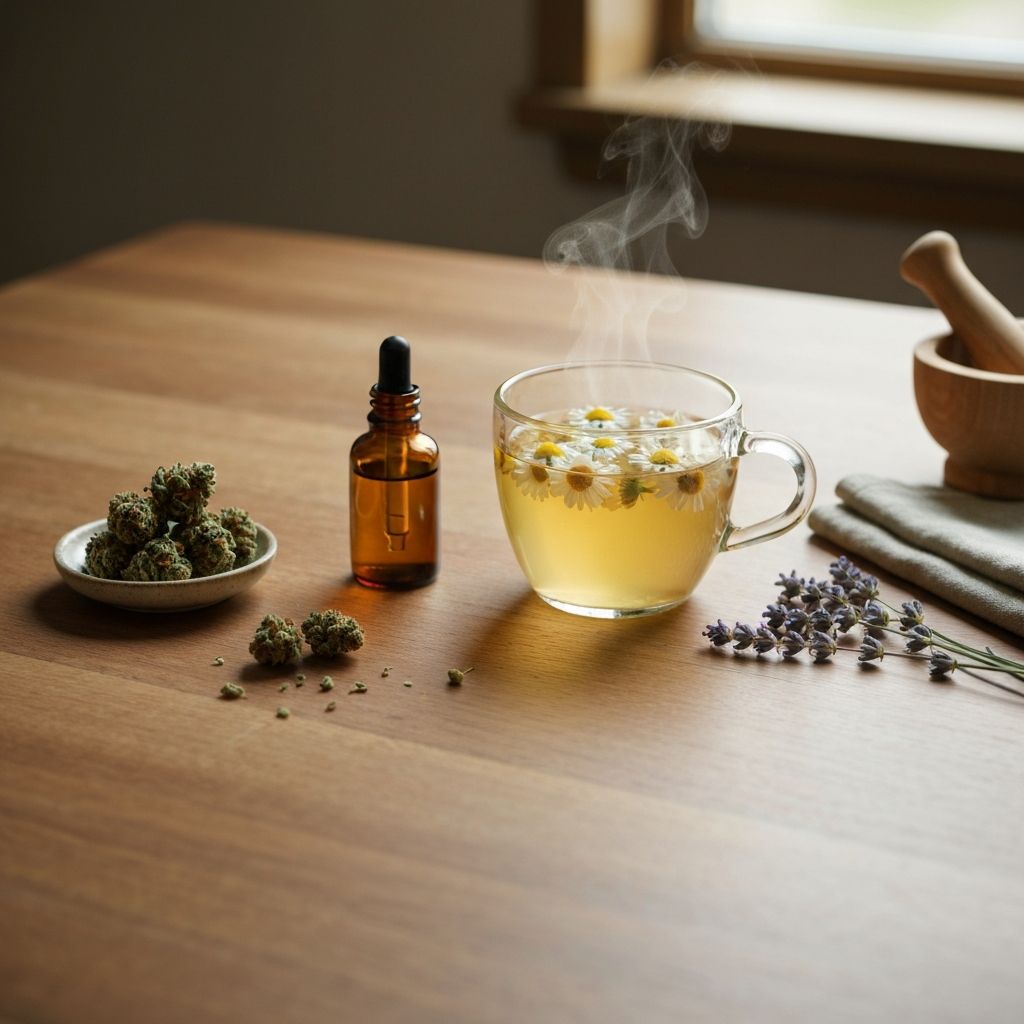
Why More People Are Exploring Smokeless Cannabis
Smokeless cannabis is the practice of using cannabis without combustion — through teas, tinctures, infused oils, and dry herb vaporization. The methods preserve cannabinoids and terpenes more cleanly than smoking, fit easily into wellness routines, and pair naturally with intentional homegrown cannabis from a small indoor setup.
Cannabis wellness culture has shifted. The plant that once arrived rolled in paper now arrives as a measured tincture in an amber bottle, an olive oil drizzled over salad, a slow tea steeping next to chamomile. The change is partly cultural — wellness has matured around the plant — and partly practical: combustion is harsh, hard to dose, and difficult to integrate into a calm evening.
Smokeless methods solve all three problems at once. Many growers building calming tea rituals start with Moon Timer because of its smooth, myrcene-leaning aromatic profile that translates cleanly into a chamomile or lavender base. Others reach for Quiet Spark for tincture work — its compact buds cure quickly and produce a clean alcohol extraction. Cooks often choose Fogline, a balanced hybrid whose aromatic profile holds up through a slow olive oil infusion.
Underneath all of it sits a quieter shift: people are growing their own. A 2×2 tent in a closet, a hundred-watt LED, a single feminized seed, and twelve weeks of patience produce a jar of cured flower for a fraction of dispensary prices and with full control over how the plant was raised. The result is not just cheaper — it is qualitatively different. Cured at 60% RH for two weeks, dried at the right pace, stored in glass: the material that lands in your tea or your tincture is fundamentally better than what comes shrink-wrapped on a shelf.
Cannabis Tea Rituals and Herbal Wellness
Cannabis tea is a herbal infusion made by steeping decarboxylated flower with calming companions — chamomile, lavender, peppermint — and a small amount of fat so the cannabinoids dissolve. It is the gentlest way to use cannabis, and the easiest entry point for a wellness routine.
The tradition of tea is older than the tradition of smoking by a thousand years. Pairing cannabis with calming herbs is not new — it is the original wellness use of the plant, ground into a paste with milk and almonds in northern India, steeped with mint along the Mediterranean. The modern version is simpler: a quart pot, a spoonful of decarbed flower, a teaspoon of coconut oil to bind the cannabinoids, and a base of chamomile or lavender or rooibos.
The reason this works for wellness, and the reason the strain matters, is terpene chemistry. Calm-leaning terpenes — myrcene, linalool, pinene — pair cleanly with herbal companions. A loud gas or citrus profile fights the chamomile. A clean myrcene-dominant cultivar like Moon Timer reads more like an extension of the herb than a separate ingredient. For more on this dynamic, our curated wellness-focused genetics are organized exactly around this principle.
Featured cultivars for tea
Cannabis Tinctures and Sublingual Use
A cannabis tincture is an alcohol-based extract of decarbed flower, dosed by the dropper under the tongue. Sublingual absorption skips the digestive tract — onset arrives in 15–30 minutes, full duration runs 4–6 hours, and dosing is measurable to the drop.
Tinctures are the most controllable form of cannabis. Two drops is two drops; the next two drops behave the same way; a 30 mL bottle yields about 600 doses if you measure carefully. This is the opposite of an edible, which can swing wildly depending on absorption, and the opposite of smoking, where each session calibrates itself by feel.
The DIY version is straightforward. Decarboxylate seven grams of cured flower at 110°C for 40 minutes. Combine with 250 mL of high-proof neutral spirit (Everclear or equivalent). Seal in a glass jar, shake daily, and steep for two weeks in a cool dark place. Strain through cheesecloth, transfer to amber dropper bottles, and label with date and strain. The result is a clear amber liquid that holds potency for at least a year.
Genetics shape the result. A premium feminized strain like Shadow Signal produces resin-dense buds that yield notably cleaner extractions, and Olive Fuse — bred for trichome density — translates particularly well into tincture work without the harshness that ruins a sublingual experience. Both cure cleanly and store well.
Infused Oils and Cannabis Botanical Craftsmanship
Cannabis-infused oils are made by gently heating decarbed flower in a fat — olive oil, coconut oil, butter — for several hours at low temperature. The cannabinoids bind to the fat, and the strained oil becomes a versatile, shelf-stable base for cooking, salad dressings, capsules, or balms.
The botanical craft tradition treats cannabis oil the way a small Italian kitchen treats herbs — slowly, with intention, in good olive oil. The point is not just the active compounds. It is the layered flavor: a peppery hybrid produces an oil that tastes like rosemary and cracked pepper; a citrus-leaning strain produces something closer to bergamot. Drizzled over a salad or stirred into pasta, the difference matters.
A handful of strains carry the aromatic complexity that makes infusion worth doing carefully. Premium cultivars like Carbon Bloom and Olive Fuse are favorites for infused oils because their terpene profiles read clearly through the carrier — pepper, earth, soft pine. For tincture and oil work specifically, the fully curated set lives in our strains suited for extraction collection.
Simple beginner infusion process
The recipe below makes one cup of cannabis-infused olive oil. Use cured flower at least two weeks past harvest. Process and equipment matter — keep the temperature low, the timer on, and the room ventilated.
01Decarboxylate the flower
Break seven grams of cured flower into small pieces — pea-sized, not fine grind. Spread on a parchment-lined tray and bake at 110°C / 230°F for 40 minutes. This activates the cannabinoids without burning the terpenes.
02Combine with olive oil
Combine the decarbed flower with one cup of high-quality olive oil in the top of a double boiler. The fat-to-flower ratio is forgiving; what matters is consistent low heat from here on.
03Infuse low and slow
Heat gently at 70–85°C / 160–185°F for two to three hours. Do not let the oil simmer or boil. Stir occasionally. A thermometer is the difference between an infusion and a ruined batch.
04Strain and store
Strain through fine cheesecloth into a sterilized glass jar. Press the cheesecloth lightly to recover oil, but do not wring it — squeezing pulls bitter chlorophyll into the finished oil. Store in a cool dark place. Shelf life is two months refrigerated.
Flavor, Terpenes, and Dry Herb Vaporization
Terpenes are aromatic compounds — the same chemistry that gives lavender its calm and citrus its lift. In cannabis, they shape both flavor and effect. Dry herb vaporization heats flower below the combustion point so terpenes vaporize cleanly, producing flavor and effect without smoke.
A dry herb vaporizer holds the flower at a precise temperature — typically 175–195°C, well below the 230°C combustion threshold. The cannabinoids and aromatic terpenes vaporize in sequence: lighter, more volatile compounds at the low end of the range, denser cannabinoids toward the top. The result is vapor instead of smoke, full flavor that survives the heat, and a measurably gentler experience.
Genetics decide the flavor ceiling. A peppery, caryophyllene-leaning strain like Night Sprint vaporizes in clean herbal layers — sage and warm pepper. Brighter, terpinolene-leaning cultivars like Lowlight Runner produce something closer to citrus rind and bay leaf. For the most aromatic profile we offer, Ember Switch is the studio choice — dense terpene expression, clean cure, vaporizes cleanly across the full temperature range. The complete list of terpene-rich genetics is curated for exactly this purpose.
Why cure matters more than the device
A two-week cure at 60% relative humidity is the difference between flat vapor and a flavor experience that registers as luxury. Terpenes are volatile — they evaporate. A rushed dry erases them. A controlled cure preserves them. Even a budget vaporizer will deliver remarkable flavor from a properly cured premium strain, and the most expensive device cannot rescue a hot-dried flower. For more on this dynamic, see our drying and curing process guide.
Wellness Methods at a Glance
Each method has its place. Tea is the slowest and gentlest, tinctures are the most measurable, infused oils belong in the kitchen, and dry herb vaporization preserves the most flavor. The table below summarizes how each compares — onset, duration, and the strain families that translate best.
| Method | Onset | Duration | Effort | Best for | Recommended strains |
|---|---|---|---|---|---|
| Cannabis tea | 45–90 min | 3–5 hr | Low | Evening rituals, sleep prep | Moon Timer, Fogline, Quiet Spark |
| Tinctures | 15–30 min | 4–6 hr | Medium | Measured daily routines | Shadow Signal, Olive Fuse |
| Infused oils | 60–120 min | 4–8 hr | Medium | Cooking, dressings, capsules | Olive Fuse, Carbon Bloom |
| Dry herb vaporization | 5–10 min | 1–2 hr | Low | Aroma-forward sessions | Night Sprint, Lowlight Runner, Ember Switch |
Why Growing Cannabis at Home Changes the Experience
The difference between dispensary flower and homegrown is not potency. It is intent. A plant raised by hand for twelve weeks — watered carefully, fed thoughtfully, dried slowly, cured in the dark for two more weeks — carries an information content that mass production cannot replicate. The result is not just better material. It is material with a story.
“Growing changes your relationship with the plant entirely.”
Patience is the underrated input. The grower who rushes the dry to chase a session loses two-thirds of the terpene profile. The grower who waits — who hangs the plant for ten days at 18°C and 60% humidity, then jars and burps for two weeks — produces flower that vaporizes in clean herbal layers and tinctures into liquid that smells like what the plant smelled like in the tent.
Beginners do not need expensive gear. A 2×2 tent, a 100W full-spectrum LED, fabric pots, and a single seed of beginner-friendly cannabis genetics produces a rewarding first harvest. Read our beginner grow guides before you germinate, and skim our cultivation philosophy if you want to understand why we breed the way we do.
Continue reading
Beginner grow guides
Tents, light, and first-grow setup essentials.
Terpene education
How aroma compounds shape flavor and effect.
Drying and curing process
The two-week ritual that decides your final flavor.
Indoor grow setup
Picking seeds and gear for a 2×2 tent.
Cannabis wellness journal
Calm-leaning genetics for tea and tincture work.
Solventless extraction
Why feminized genetics produce cleaner extractions.